Lock Shop Direct measurement guide
How to Measure a Padlock
Use this guide to measure a padlock and the hasp, staple, chain or eye it must pass through, so you can choose the right body and shackle size.
Important: Do not choose by body width alone. The shackle diameter and internal clearance must fit the item being secured, while leaving as little unnecessary exposed shackle as practical.
1. Record the six main padlock dimensions
Measure in millimetres with the padlock closed. The clearance inside the shackle is normally more important than the overall height.
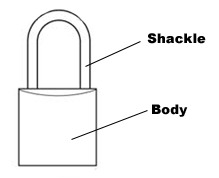 A body width; B overall height; C body thickness; D clearance width; E clearance height; F shackle diameter.
| What to check |
How to measure or identify it |
Record |
| Body width |
Across the widest part of the body. |
_____ mm |
| Body height |
Top to bottom of the body only. |
_____ mm |
| Body thickness |
Front to back of the body. |
_____ mm |
| Overall height |
Bottom of body to top of closed shackle. |
_____ mm |
| Clearance width |
Inside width between the two shackle legs. |
_____ mm |
| Clearance height |
Inside height from top of body to inside crown of shackle. |
_____ mm |
| Shackle diameter |
Thickness of one shackle leg. |
_____ mm |
2. How each measurement is taken
3. Measure the hasp, staple or chain
The padlock must fit the item it secures. Measure:
- Diameter of the hole in the hasp, staple, chain link or eye.
- Thickness of all parts the shackle must pass through.
- Required clearance width and height.
- Space available for the padlock body and key operation.
- Whether a closed-shackle or shackleless design can be used.
Choose the shortest practical shackle that provides the required clearance. Excess exposed shackle can give more room for attack.
4. Match the padlock to the environment and risk
Indoor or outdoor
For exposed locations, check corrosion resistance, drainage and weather protection.
Security level
Match the padlock, hasp and fixing strength to the value and risk. Check any insurer or CEN-rating requirement.
Keying
Choose keyed to differ, keyed alike, master keyed or combination operation as required.
Restricted access
For controlled key duplication, select a suitable restricted or patented key system.
Safety lockout
Lockout padlocks are identification and safety products, not general high-security padlocks.
Marine or harsh use
Check the complete product specification; stainless components and protective covers vary by model.
5. Final check before ordering
- The shackle passes through the hasp or chain without binding.
- The internal clearance is sufficient but not unnecessarily large.
- The body can sit in the available space.
- The key or combination can be operated comfortably.
- The hasp, staple, chain and fixings are at least as suitable as the padlock.
- The product’s security and weather specification suits the application.
Still not sure which product you need?
Send our team clear photographs and your measurements before ordering. Please include:
- A photograph of the existing padlock and the item being secured.
- Body width, thickness and overall height.
- Shackle diameter, clearance width and clearance height.
- Hole diameter and thickness of the hasp, staple or chain.
- Indoor/outdoor use, security level and keying requirement.
This guide is intended to help identify and measure replacement hardware. Product designs, terminology and handing conventions can vary by manufacturer. Always compare the complete product specification and fitting instructions. Where a door or fitting forms part of a fire escape, fire door, powered system or other safety-critical installation, obtain advice from a competent person before ordering or altering the hardware.